SCADA & Production Monitoring
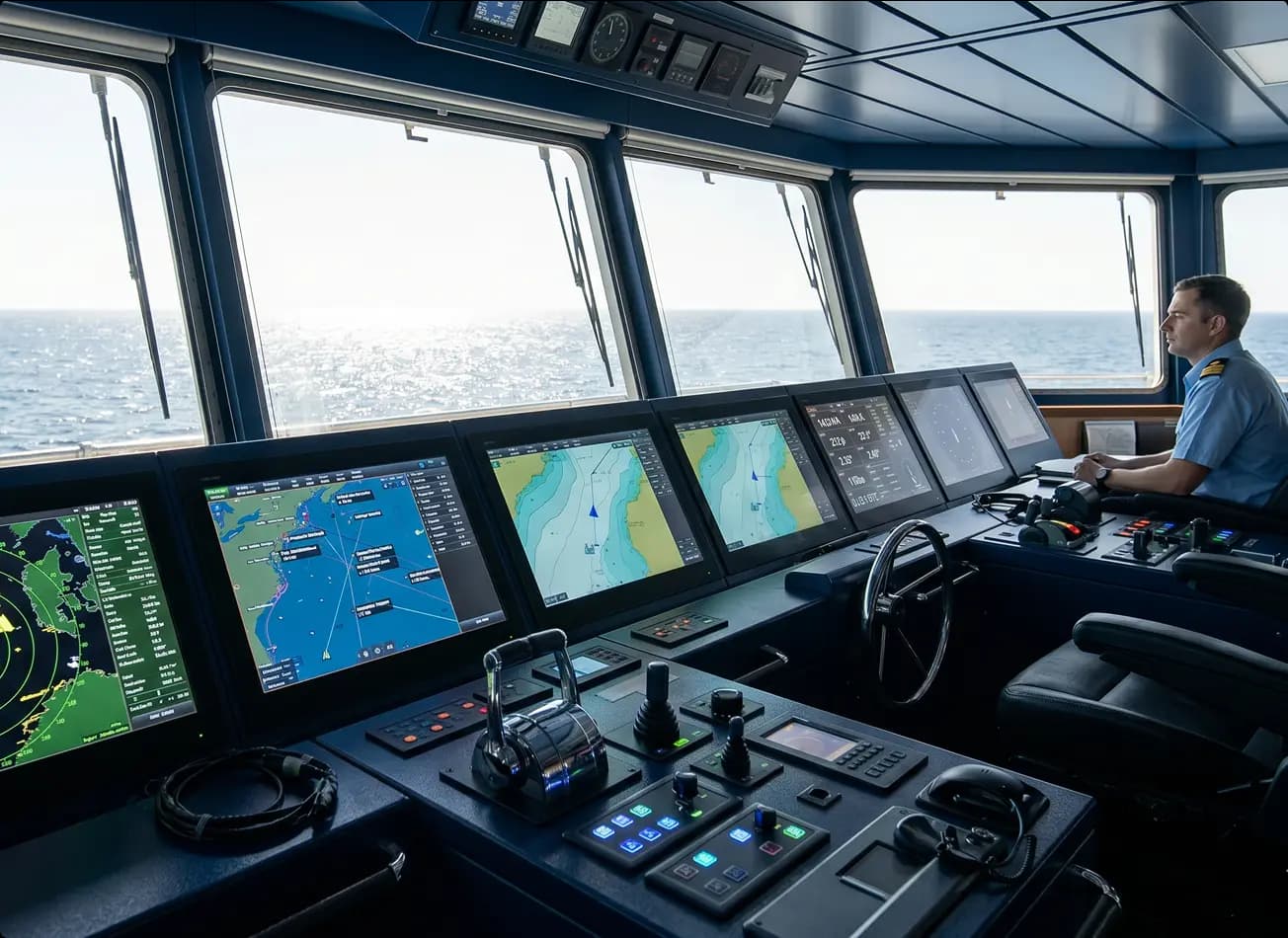
Real-time monitoring of drilling parameters, production flow rates, pressures, temperatures, and equipment status. Data transmitted to onshore control centers for analysis and decision-making.
Fieldbase delivers ruggedized satellite connectivity for operational communications, SCADA systems, safety networks, and crew welfare in the harshest offshore environments.
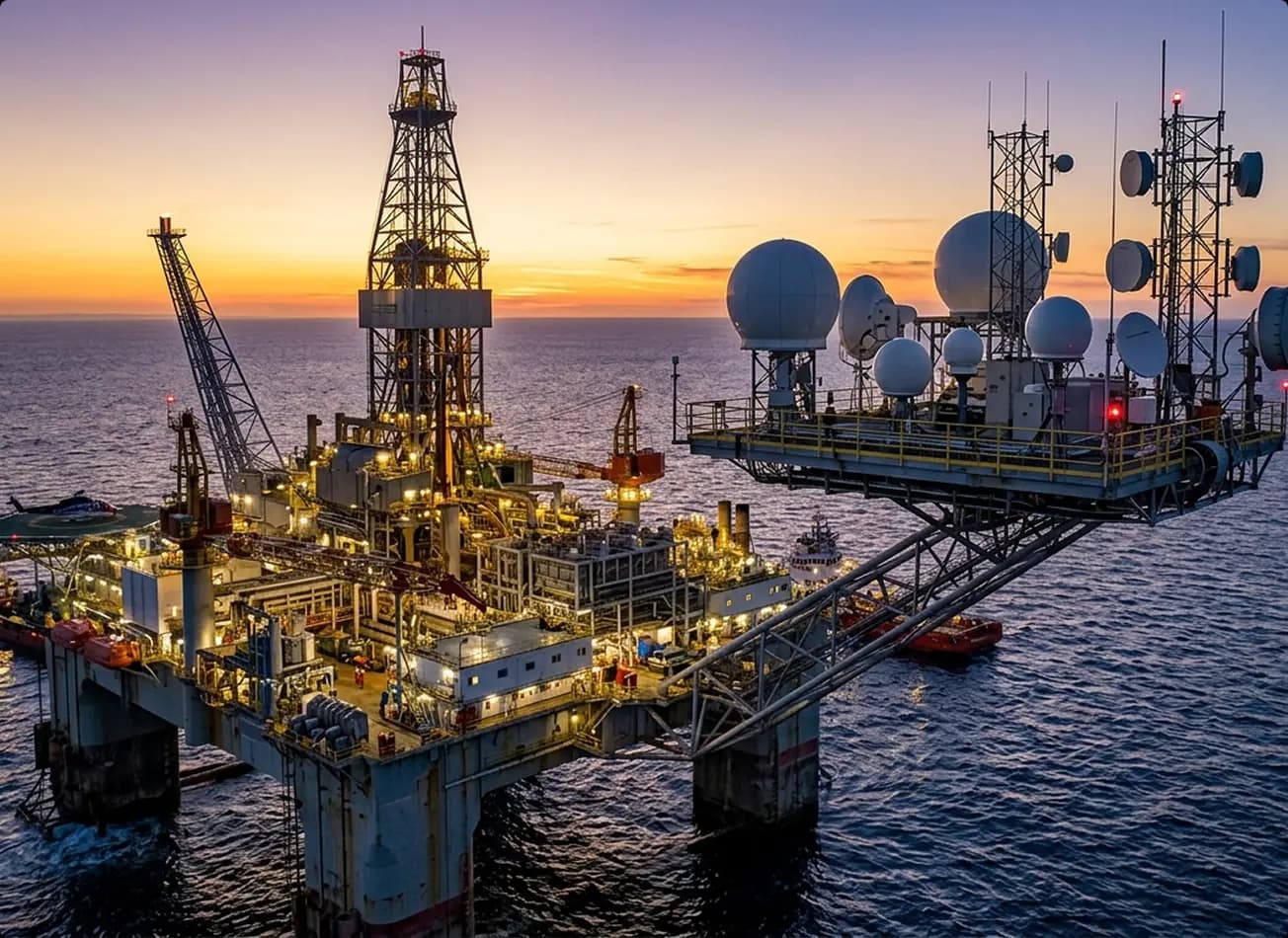
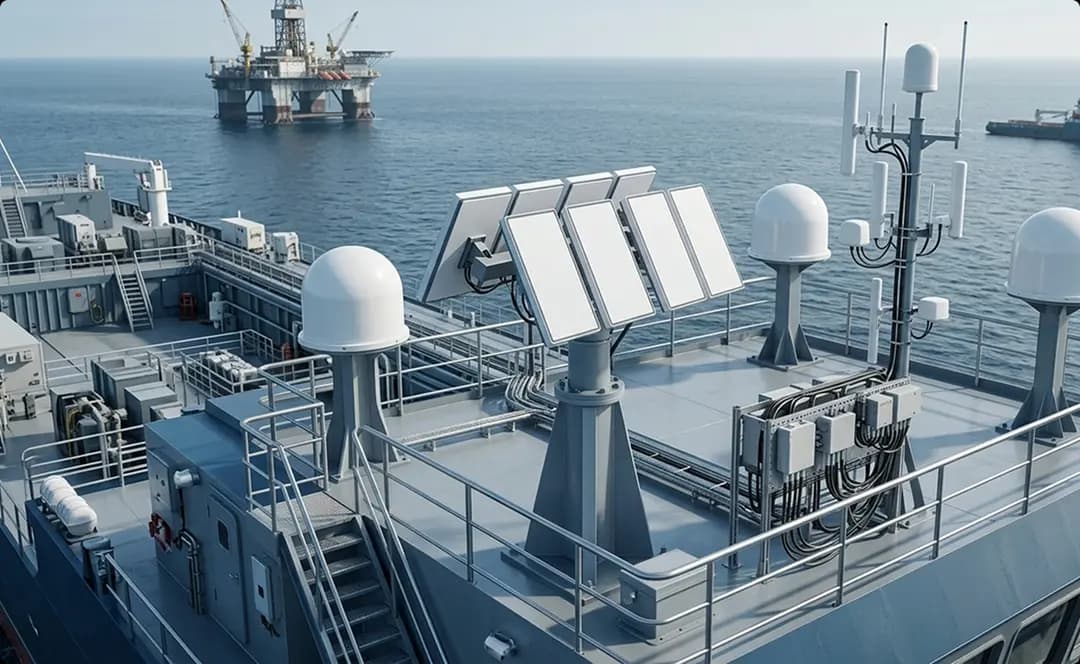
Offshore oil and gas operations demand connectivity that works in environments where most technology fails: high winds, salt spray, extreme temperatures, vibration, and constant motion. Connectivity isn't optional—it's mission-critical for production monitoring, safety systems, operational coordination, regulatory reporting, and crew communications.
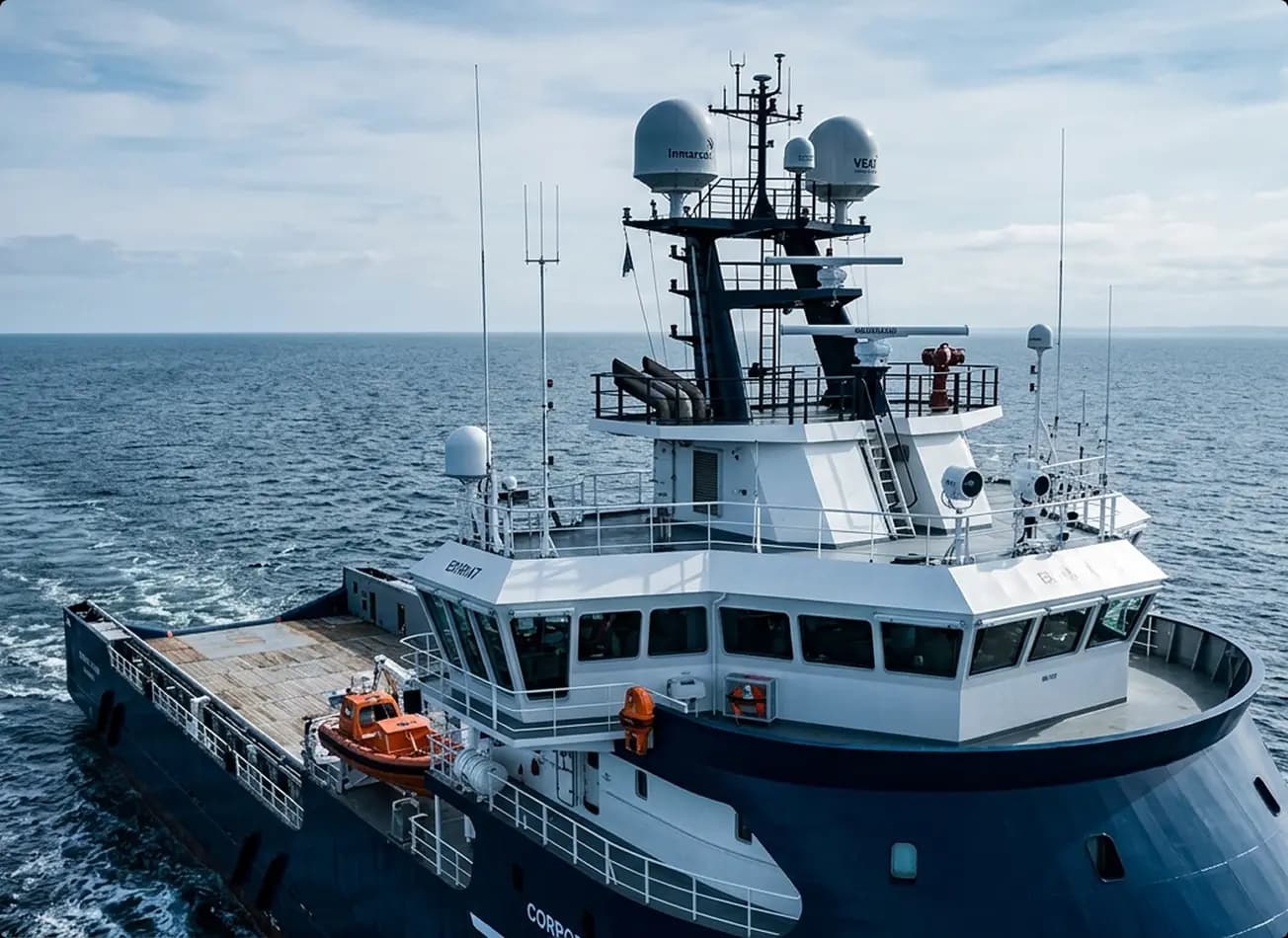
Fieldbase specializes in offshore connectivity solutions designed to survive and perform in these conditions. We deploy marine-rated satellite terminals, ruggedized network equipment, and redundant architectures that ensure offshore platforms, drilling rigs, FPSOs, and support vessels stay connected.
Starlink Maritime's flat-panel antenna and low-latency LEO satellite constellation work well on offshore platforms and vessels:
100 to 350 Mbps, low latency
20-50ms latency (suitable for real-time SCADA and VoIP)
Compact antenna footprint
Offshore platforms and vessels requiring high-speed internet for operations, data transmission, and crew welfare.
GEO VSAT provides reliable global coverage and scalable bandwidth:
Proven reliability in offshore environments
Available bandwidth from 1 Mbps to 20+ Mbps
Suitable for regions without Starlink coverage
Offshore operations requiring guaranteed global coverage or operating in areas where LEO services aren't available.
For platforms within line of sight of shore or nearby installations, microwave links provide high bandwidth, low latency connectivity with speeds from 100 Mbps to over 1 Gbps, sub 5 ms latency, lower operating costs than satellite, and reliable performance with proper frequency planning.
Best for
Requires direct line-of-sight. Not suitable for platforms beyond visual range or in areas with frequent fog.
Real-time monitoring of drilling parameters, production flow rates, pressures, temperatures, and equipment status. Data transmitted to onshore control centers for analysis and decision-making.
Send drilling logs, mud reports, well data, and geological surveys to onshore engineers for real-time analysis during drilling operations.
VoIP phones, emergency alarms, mustering systems, and safety announcements require reliable network connectivity. Backup systems ensure communication during emergencies.
Transmit production reports, environmental monitoring data, and compliance documentation to regulatory authorities and government agencies.
Enable remote troubleshooting and technical support from onshore specialists via video conferencing, remote desktop, and screen sharing.
Provide internet access for crew to call family, use messaging apps, and access entertainment. Separate network from operational systems to prevent interference.
Step by step execution for safe and efficient offshore setup.